
Tree Tops
This book on photographs of trees have a strong slant towards newer, more unusual projects that capture a wealth of forms, landscapes and ecosystems.

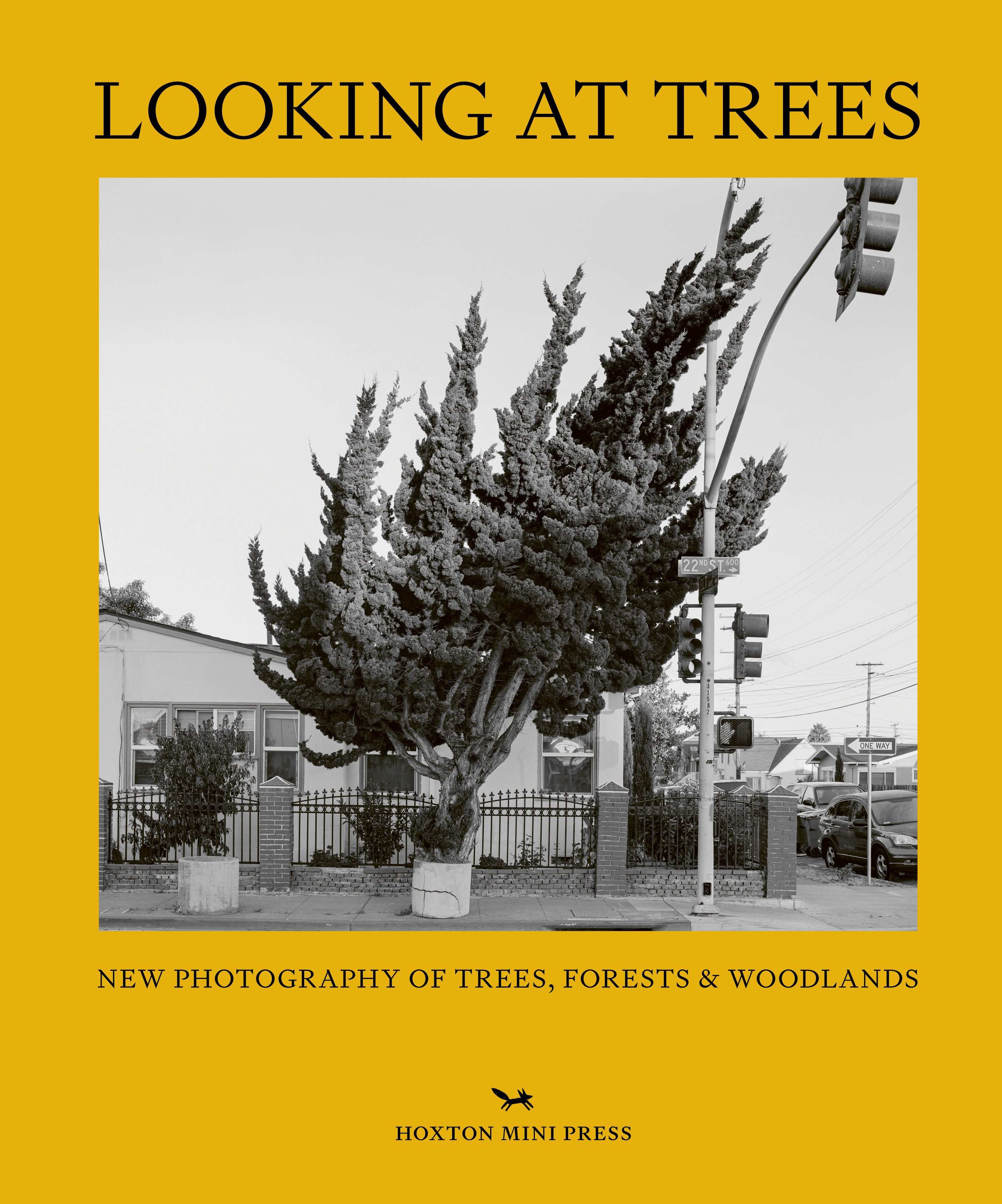
Looking At Trees: New Photography of Trees, Forests & Woodlands by Sophie Howarth is a big hardback book. 237 x 285mm. 224 pages. I know what you may be thinking so let’s clear that up. Publishers Hoxton Mini Press plant at least one tree for the order of this book and all of their books are carbon offset. Throughout the pages the reader is introduced to the work of 24 photographers of varying nationalities who’ve committed part of their career to chronicling timber. The pages take the viewer across the globe from the United Kingdom, USA, Madagascar, Morocco, Tonga, Sicily, Australia, Germany, Japan and South Africa. From the jungles of Brazil to valleys of Romania. Canadian forests to lava fields of Iceland.
It’s a book packed full of emotion, hope, joy, beauty, grief and rage. An eye popping and eclectic exploration into a species that evolved 350 million years before us. It’s a book of dedication and method. Photographer Einar Örn has been photographing one solitary century old Icelandic Birch (Bjork) in the west of Iceland from a similar position for over 12 years. The birch takes us on a journey through the seasons and hues, from snow covered branches to Spring buds. After a spell of serious illness, to aid photographer Alexandre Miguel Maia’s recovery, he took to the German forests, repeatedly wandering through the heaths and wetlands, taking his time, absorbing the surroundings. In 2004, David Spero began photographing a small number of communities and individuals in Britain exploring ecologically sustained, low impact ways of living. A fire pit, chicken run, compost toilet and unique dwellings are pictured in kinship with woodland.
UK based Brazilian photographer Letitia Valverdes has two decades experience working in the Amazon. Locked down during the COVID-19 pandemic with three primary school aged children, as the Amazon continued to burn and Brazil’s then President Jair Messias Bolsonaro continued to lobby for damaging constitutional amendments that would dismantle existent environmental laws, Valverdes felt compelled to educate her children about the ongoing ecocide and genocide. ‘More than arithmetic and times tables I wanted my kids to know that the Amazon and its people are in great danger, that the attack and disregard for the forest and its people takes place in different ways and on several fronts, and if we do not do something now this incredible ecosystem will have collapsed by the time they are adults,’ she says. Valverdes printed images from her Amazon archive and together they transformed them using gold, blood, earth and leaves collected from a jungle adventure. ‘We also burnt some of the pictures to symbolize the massive fires we were seeing on the news. Through the process we discussed, in an age appropriate manner, what are the threats and challenges facing the region. I hope to have sensitively educated them to this imminent tragedy, while trying to articulate some of my own emotions felt in relation to the situation,’ she explains.
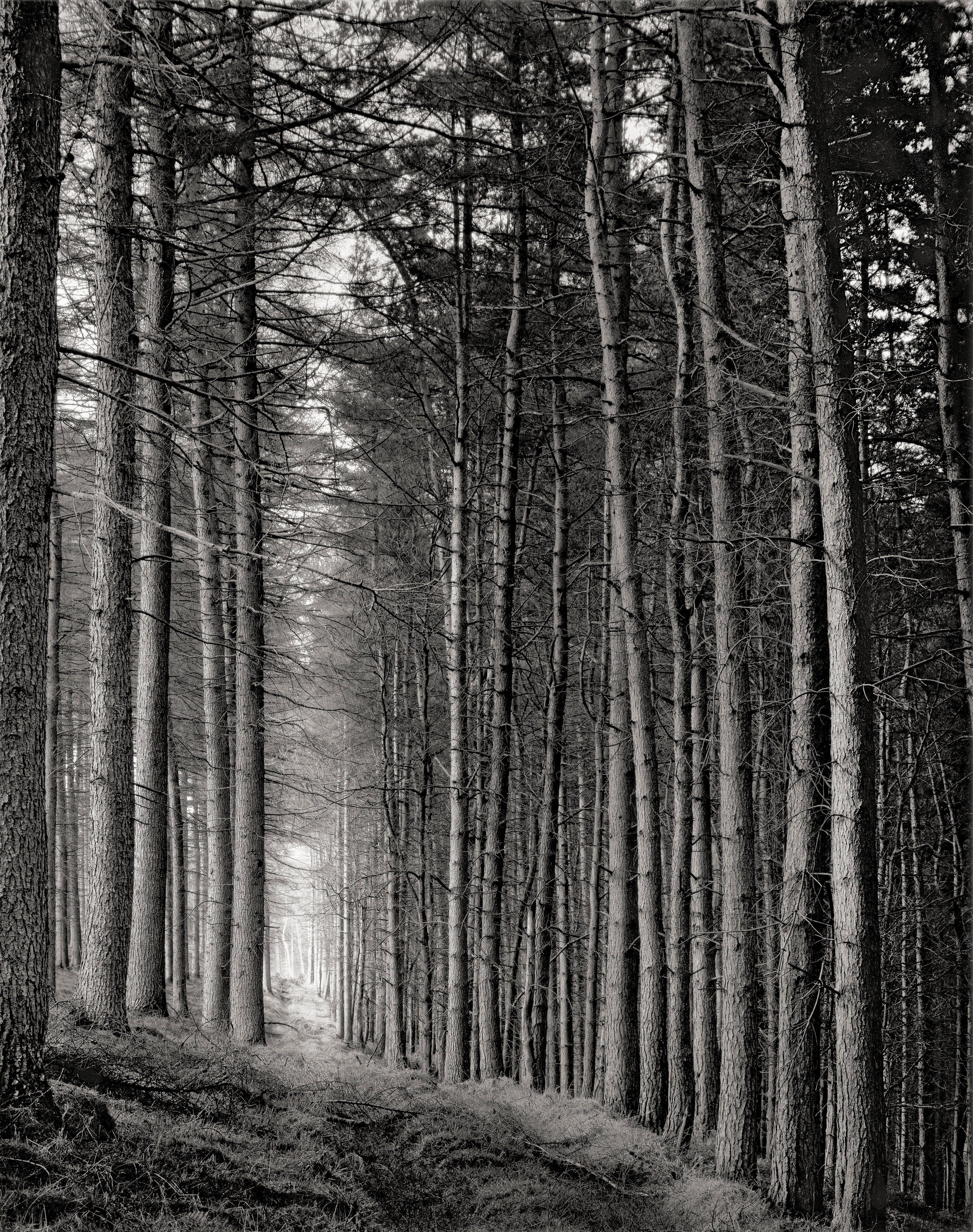
The book is aesthetically diverse and delivers lesson after lesson in photographic technique. Committed city dweller Sue Bailey, used available light to communicate her love of nature and the city and the complexity of the relationship. In her series Night Trees NY, New York trees are illuminated by street lights, traffic lights, lights from buildings and signs, light from passing cars, and the light of the moon. Paul Hart used large and medium format film cameras to portray an ageing pine forest plantation in Derbyshire, UK. Through traditional darkroom printing processes the final black and white images are pin sharp with rich blacks that draw the viewer's eye deep into the copse. Beth Moon applied a 19th century process technique to render the Baobabs of Madagascar, Red Cedar of Wales and Kapok Tree in FLorida, USA. For each print Moon mixes ground platinum and palladium metals to make a tincture that is hand coated onto heavy watercolour paper and exposed to light. The metals used are more stable than gold. ‘By using the longest lasting photographic process, I hope to speak about survival, not only of man and nature’s but to photography’s survival as well,’ says Moon.
‘Cherry blossoms are so beautiful that I don’t think I’ve spent as much time looking at anything else. Facing a sakura tree my eyes shift from one petal to another from one flower to another until the whole picture is grasped. In SAKURA (the (m) editions / Ibasho, 2021) I attempt to visualise the move of my observing eyes and crystallise the visual experience of meditating and wandering upon the blooming tree. As a result the images show that photography captures not only a specific moment but also the passing of time,’ states Japanese photographer Yoshinori Mizutani. The blurred effect of his cherry blossom creations are achieved using a strobe light moving the camera around the trees.
Richard Mosse fitted a multispectral camera to a drone which flew over areas of deforestation, pollution and mining of the Brazilian Amazon, capturing bandwidths of reflected light often invisible to the human eye. Geographic Information Software then interpreted the spectral bands, containing environmental data and assigned them into the visible RGB colour space. The final large scale archival pigment prints are spectacular. ‘Some are incredibly aesthetic, producing rich lipstick reds and purples along the riverbanks of a charred forest, showing quite clearly the stress to remaining plant life, some of which was half burned, and in the process of dying. The colours are often quite electric, yet, articulated over such highly detailed organic landscapes, the resulting images feel very fragile. This work conveys frangible organic matter dominated by extractive violence at the hand of man. They are living maps, showing signs of life, but evoke die-back, tipping points and ecocide,’ he writes.
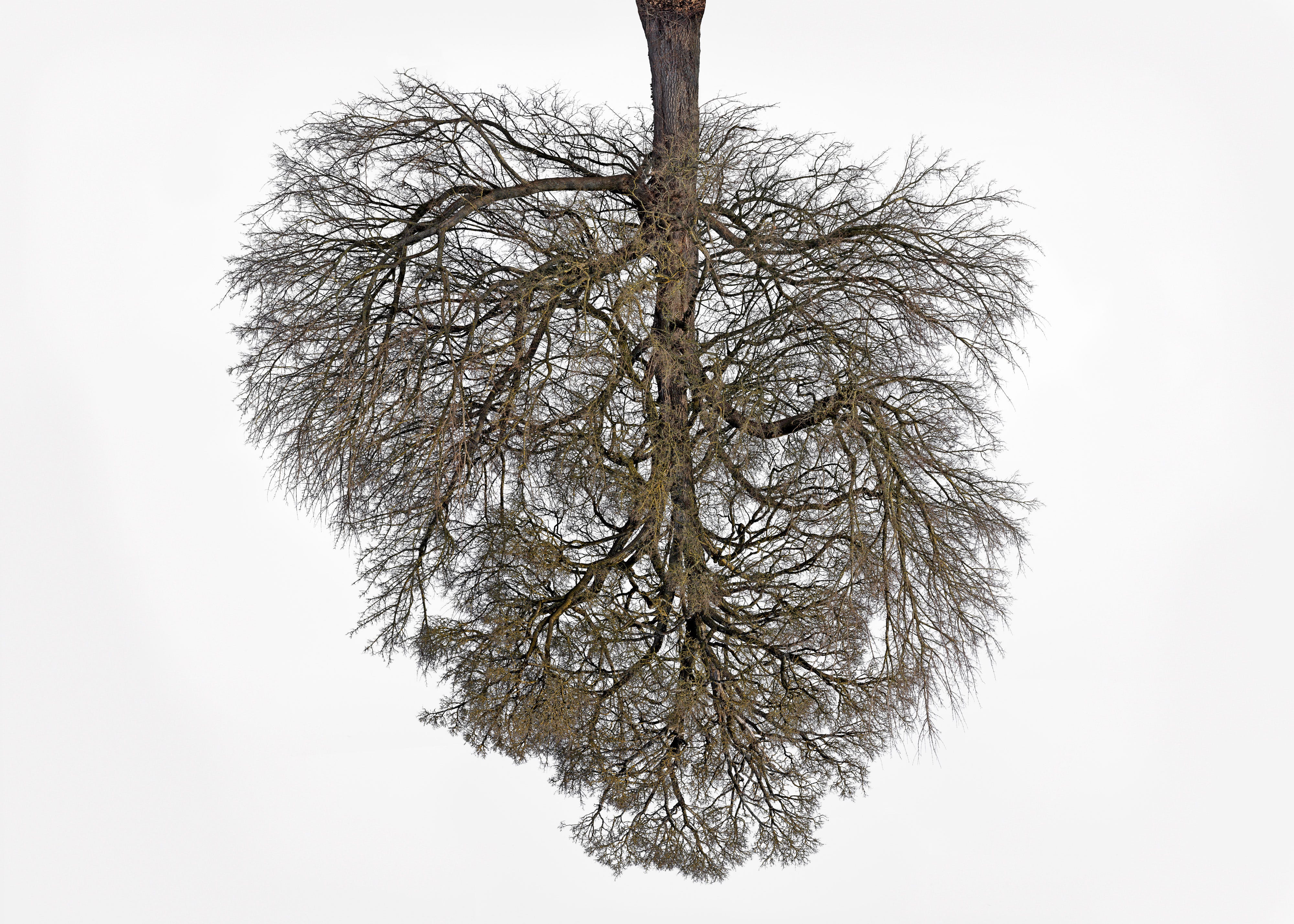
‘I feel a deep reverence for their unique nature as I create my images. For me, trees represent the connection between energy (air, light) and the material world (soil, earth),’ reveals photographer Christophe Franke. For his Tree Crowns series, he digitally stitches together 20 to 30 photos of a selected tree, removing the sky and any background obstructions to leave a neutral backdrop. He then flips the image. ‘I opted to position the treetops upside down in the final work , just as they are projected onto our retina initially. Reversed in that way, the images remind me of roots, medicinal illustrations of a human lung, a family tree or a symbolic tree of life, as they appear in ancient traditional weavings.’
For Robert Voits’ series there are no trees at all. Voit travelled with a 5x4-inch field camera to the USA, South Africa, Europe, Israel and even North Korea in search of what he calls New Trees, cellular phone antennae of steel, fibreglass and plastic, camouflaged as trees and cacti. These permanently bloomed solitary structures are pictured towering over neighbourhoods and rusting in the desert.
Trees inhabit our lives from birth. They are a common fairy tale setting in nursery school story books. They are scribbled in pictures with a brown trunk and green bushy top displayed proudly on a parents fridge. They are conspicuous in art, pop songs, poems, films, literature and news bulletins. Ashes of the dearly departed are scattered around trees, saplings are planted in memory of them, benches are positioned in parks along tree lined paths.
We all walk past trees every day but how often do we really stop and look? In a rapidly changing world, it’s more important than ever to consider our relationship with nature. Looking At Trees brings together some of the world’s best contemporary photography whose images encourage us to reconnect with the wisdom of these ancient lungs of our planet.
Looking at Trees. Text by Sophie Howarth. Published by Hoxton Mini Press (2023) RRP £35.00
LOOKING AT TREES : TOP TIPS
The book shows us what we think about trees in different ways. It’s an education in looking and an opportunity to reevaluate what it means to have trees in our lives. Trees are accessible to all of us all year. Useful tips can be harvested from each of the books featured photographers and images.
Plan Ahead: Get to know the seasons of the area you want to photograph and how the light behaves at different times of day and where. Use Apps to plan shots at home or on location such as PhotoPills and The Photographer’s Ephemeris to see exactly where the sun, moon, or Milky Way is going to appear in the frame.
Lighting: Nature doesn’t have to be lit naturally, use strobe lighting, flash or available shops and street lights to add a sense of drama and mystery to your images.
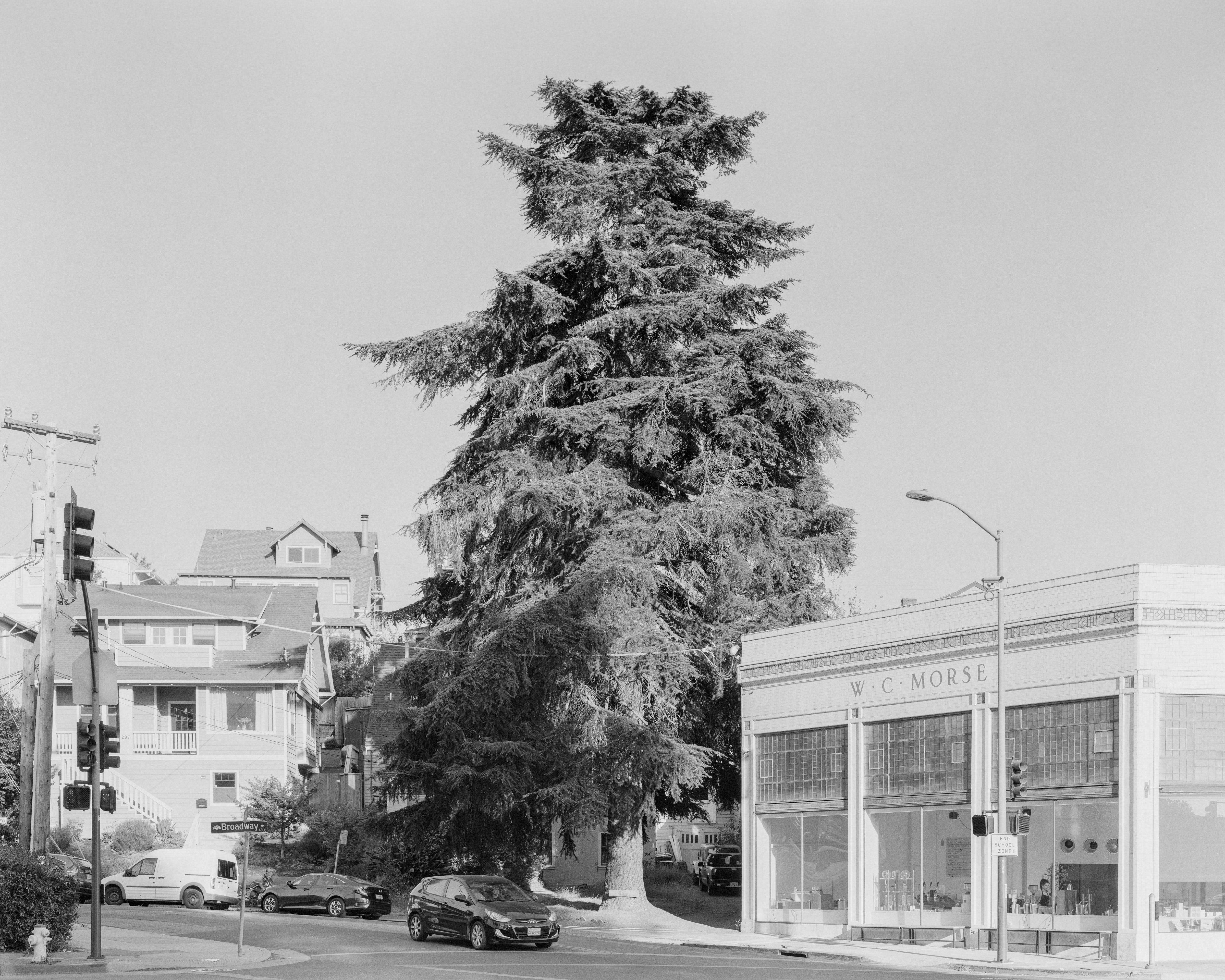
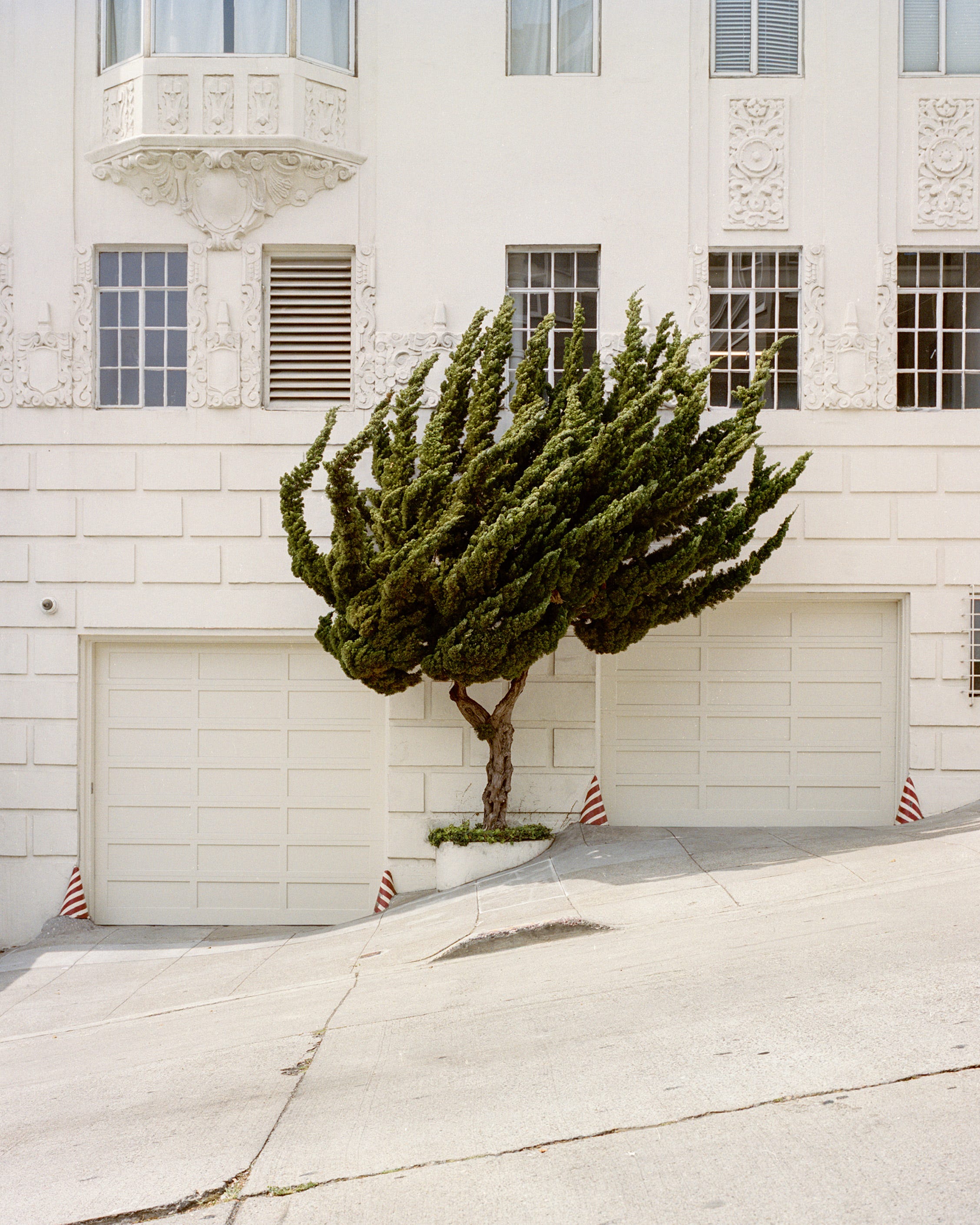
Scale: Juxtapose trees with people, buildings or other structures for scale.
Technology: From 19th century processes to drones, consider what technologies will make your tree photography more impactful. Use a long lens in dense wood to create a dramatic perspective.
Familiarity: Photograph the same tree for a year.
Presentation: Displaying your photographs of trees in diptychs, triptychs and polyptychs can emphasise the height and breadth of trees that are too complicated to capture with a single perspective and frame.
Detail: Focus on one element of a tree, a leaf or root. Take fallen tree parts back to the home tabletop or studio, isolate them to create a still life story.
Tamper: Rip, shred, burn or add materials to your photographic print.
City Dwellers: Don’t assume you have to travel to the countryside, woodland or forest for spectacular opportunities. City trees are abundant, there are an estimated 8.4 million trees across London, nearly one for each of its 8.6 million residents.
Current Affairs: Check the news to see if trees are in danger and use them as a peg for a reportage. Remember Swampy?
Proactivity: Photograph trees today as they might be gone tomorrow.
What a well written introduction to trees! Another book for the shopping list. I may have to build an extension to my bookcase! Thank you for this great post!